
Strep throat
Strep throat is a common bacterial infection that causes a sore throat, often with sudden onset and significant discomfort. It primarily affects the throat and tonsils, leading to inflammation and pain. While usually not serious, it's important to treat strep throat to prevent potential complications.
Common symptoms
- Sudden sore throat, often severe
- Painful swallowing
- Fever (101°F or higher)
- Tiny red spots on the roof of the mouth (petechiae)
- Red and swollen tonsils, sometimes with white patches or streaks of pus
- Headache
- Nausea or vomiting (especially in younger children)
- Body aches
What parents keep on hand
These are everyday supplies parents tell us they like to have on hand, not medical advice. Nothing here diagnoses or treats anything. Always follow your pediatrician's guidance, and check labels for your child's age and weight.
As an Amazon Associate, I earn from qualifying purchases. This may help support Ickly at no extra cost to you.
- Throat comfort for older kids
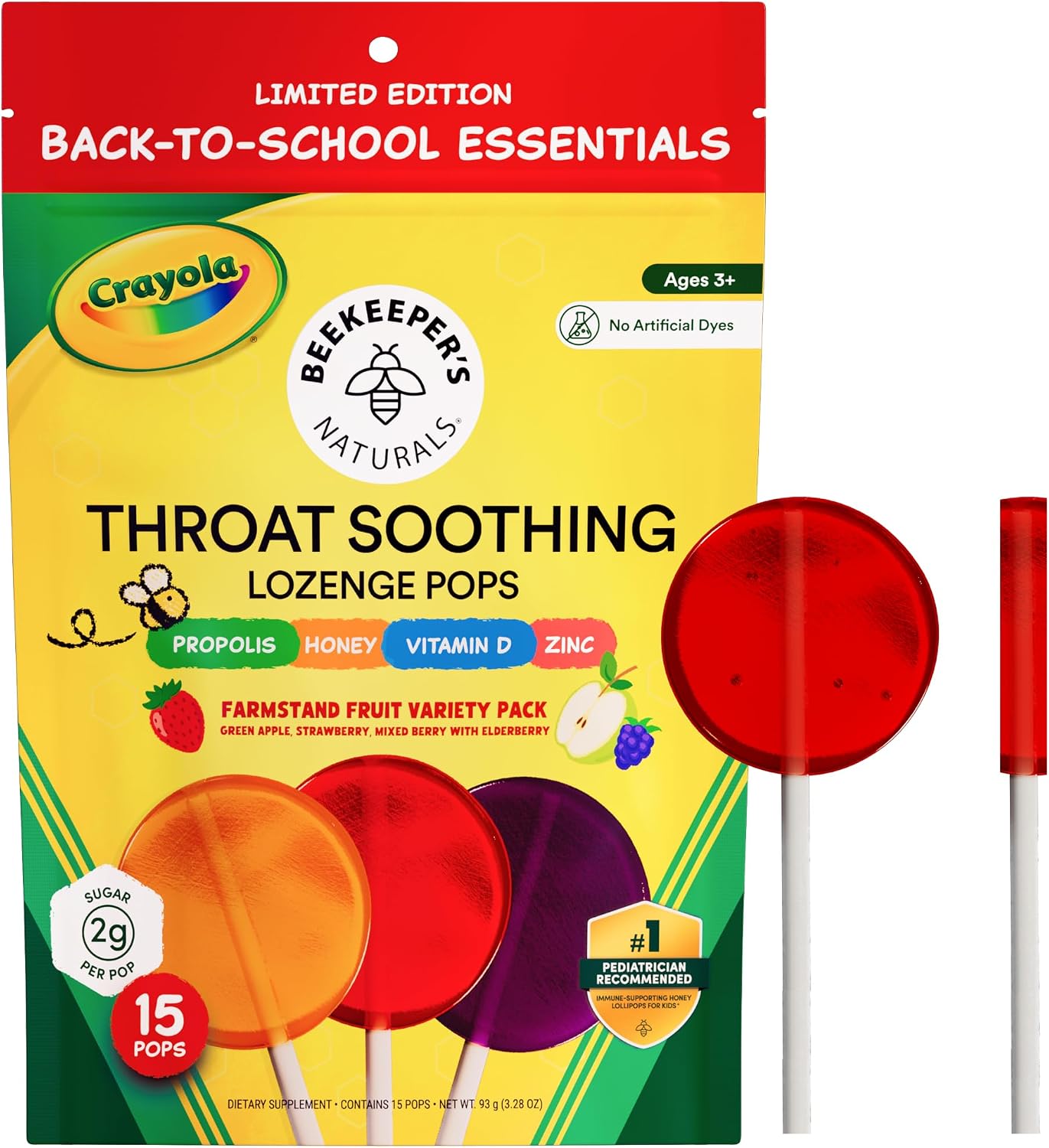
Beekeeper's Naturals Throat Soothing Lollipops (Propolis, Honey, Vitamin D, Zinc)
Lozenges or warm-drink supplies for kids old enough not to choke on them.
Cause
Strep throat is caused by a type of bacteria called Streptococcus pyogenes, also known as Group A Streptococcus (GAS).
How common is it?
Strep throat accounts for approximately 20-30% of sore throats in children ages 5-15, translating to millions of cases annually. According to the CDC, group A Streptococcus causes approximately 5-15% of sore throats in adults but up to 30% in school-aged children. Peak season is late fall through early spring.
Treatment
Strep throat is treated with antibiotics prescribed by a doctor, which are crucial to prevent complications like rheumatic fever. Ensure your child completes the entire course of antibiotics, even if they feel better, to fully eliminate the bacteria. Pain relievers like acetaminophen or ibuprofen can help manage fever and throat pain.
Prevention
To prevent the spread of strep throat, encourage frequent handwashing with soap and water, especially after coughing or sneezing and before eating. Teach your child to cover their mouth and nose when they cough or sneeze, and avoid sharing eating utensils, cups, and food with others. Keep your child home from school or daycare until they have been on antibiotics for at least 24 hours and their fever has subsided.
See what's going around
Track Strep throat and other illnesses at your child's school in real time.
Frequently asked questions
Strep throat articles for parents
- December 2025Strep Throat Season in Chicago: Symptoms, Testing, and TreatmentStrep throat cases are rising in Chicago schools. Learn how to spot the signs and why early treatment matters for your child.
- October 2025When Should Kids Stay Home from School?Guidelines to help parents make the tough call about keeping sick kids home.
- December 2025Managing School Sick Days: A Chicago Working Parent's Survival GuideWhen your child is sick and you have work, something has to give. Practical strategies for Chicago parents juggling careers and caregiving.
Related illness guides
Medical disclaimer: Educational only. Always consult a healthcare provider for diagnosis and treatment.